

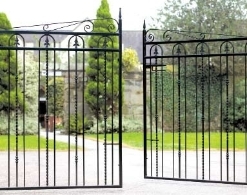


There is no doubt that as the snow begins to melt and the last of the winter weather dissipates, metal gates have never looked worse! This isn’t an exaggeration – its reality. After months of road salt spray, grime, and debris that have been driven into the gates by the elements, they have never looked so dirty. Spring cleaning is not just for indulgence – it's for preparation.
While the first decent spell of dry weather may tempt you to grab your pressure washer and go to town on your metal gates, we would strongly advise you not to – just yet. Metal gates require a very particular type of cleaning that not only removes damaging substances from the surface of the gates but does so without damaging the protective coating. If you get this wrong, you will end up removing protective coatings that have taken months to cure properly. If you get it right, your gates will be in pristine condition, and you will have identified all the damage that the winter weather has caused.
At Metal Gates Direct, we have seen many cases of homeowners doing exactly that – damaging sound gates with over-zealous spring cleaning. We have also seen gates being ruined because they have not been cleaned properly in the first place. There must be a happy medium somewhere – thorough enough to make a difference, yet gentle enough not to cause damage. In this article, we will show you exactly how to do that.
Understanding the Composition of Winter Deposits

When we say that metal gates have been cleaned after the winter season, we don't just mean that they have been cleaned of dirt. We mean that they have been cleaned of a multitude of substances that have different effects on different materials.
Road salt spray is particularly damaging to metal gates. Chlorides in the salt accelerate corrosion at an alarming rate. If salt residue remains on the surface of the gates in the form of powder coating or paint, then it will actively start to damage the protective coating. Spring cleaning must be thorough enough to remove all salt residue.
Organic Matter – Leaves, Bird Droppings, Pollen Etc.
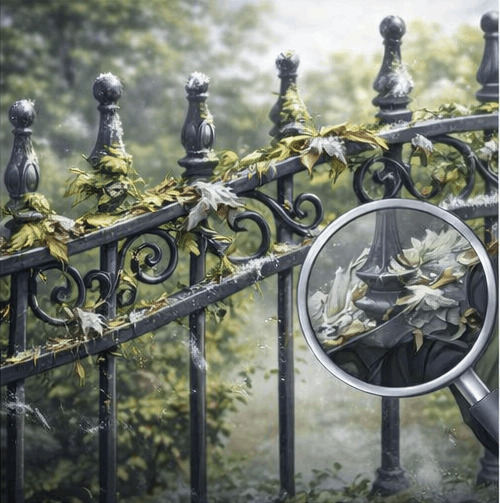
Organic matter – fallen leaves, bird droppings, pollen – traps moisture onto the surface of the gates. The moisture that this debris holds creates the perfect conditions for corrosion. While the debris itself does not damage the gates in the least, the moisture that it holds does.
The acidic compounds of industrial fallout on urban gates attack coatings on horizontal surfaces. They erode coatings slowly but surely. Cleaning them off stops the process of damage.
Mud and soil splashed onto the lower sections of the gates during winter rains contain minerals that stain and corrode. They continue to cause problems if left there and continue through summer.
The Pre-Cleaning Assessment
It is essential to inspect the gates before touching any brush or water for cleaning. Spring cleaning is one thing, and understanding what is there before you start is essential.
Take photographs of the gates from different angles. These photographs are essential before you start cleaning. They help you assess if you have cleaned and not damaged anything.
Identify areas where there is rust staining, damage to coatings, and any suspicious discolouring. These need special attention during cleaning and help you determine if there is any serious damage or if it is superficial.
Look for any loose items, damaged welds, and any other areas where water penetration could cause damage. Some of these may need repair before cleaning and not after.
Basic Cleaning Method
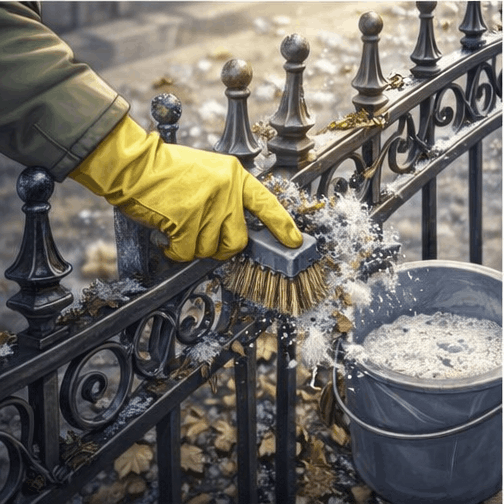
Most metal gates react very well to simple and gentle cleaning methods. This is where you should start before moving on to more aggressive cleaning methods.
Mix mild detergent and warm water. Washing-up liquid works fine for cleaning metal gates. Avoid using harsh chemicals and degreasers unless you are dealing with serious contamination. These chemicals may damage powder coatings and paint needlessly.
Use soft-bristled brushes and soft cloths. Avoid using hard-bristled brushes and abrasive cloths, as they scratch coatings. These scratches appear minor but become points for water penetration and subsequent rusting.
Clean from the top downwards. This way, you avoid dirty water running onto clean sections of the gates. You also avoid standing in water and cleaning at the same time.
Start with gentle application. Dip brush in soapy water, apply to gate sections, and scrub lightly. Rinse often to see progress. Most winter grime will come off easily with this gentle approach.
Be sure to clean horizontal sections thoroughly. These include top rails, ledges, and other flat surfaces that will have more grime than the vertical sections.
Be gentle with decorative work. Scrollwork and other details will trap dirt in the spaces between them. Use smaller brushes to reach in and clean out these spaces. Do not force anything, as this can damage the gates.
Rinse with clean water to remove soap residue. Soap can attract dirt and disrupt the gates' coatings.
Addressing Stubborn Contamination
Not all grime will come off with gentle application. It is best to gradually increase the severity of cleaning measures rather than immediately using harsh measures.
Salt Residue Removal
If there is a white crusty residue on the gates, this is salt residue that must be completely removed.
A vinegar solution of 50/50 water and white vinegar will dissolve salt residue without damaging the gates' coatings. Apply liberally and allow five minutes to sit before rinsing.
If there is a great deal of salt residue, using the solution three times will be more effective than using it once with heavy scrubbing.
Bird Droppings and Organic Stains
Bird droppings on the gates will have dried and will bond tenaciously to the powder coating.
Avoid using aggressive measures to remove bird droppings, as this will damage the gates' coatings.
Soak the area with soapy water and allow to sit for 10 to 15 minutes to allow water to penetrate and loosen the droppings.
Gently scrub the area to remove the softened droppings.
If organic stains are particularly stubborn, using a specialised cleaner designed to remove stains from powder-coated surfaces can be very effective.
Rust Staining
Rust staining will be visible as orange-brown discolouration on the surface. This means that the coating failure has already occurred, though perhaps not visibly.
For light rust, the rust will change colour with gentle rubbing using fine wire wool (0000 grade) and soapy water. You must be careful, though, because you're removing the rust without damaging the coating around the rust.
For heavy rust, rust removal products must be used. These products either react with the rust to change its composition or dissolve the rust.
However, if the rust is heavy, cleaning will show you the severity of the problem, but will not solve the problem.
The Pressure Washer Question
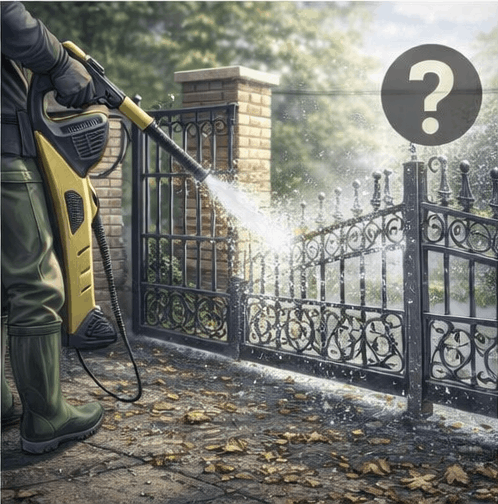
Pressure washers are effective in cleaning gates, but they can be dangerous if not used properly.
Use the least pressure that will get the job done. High-pressure washers will remove the powder coating or the paint on the metal surface. Once the protective coating is removed, you can't get it back.
Use the appropriate distance between the nozzle and the surface to be cleaned. The nozzle must be at least 30cm away from the surface.
Avoid using the spray nozzle on the gate's surface near decorations, welds, or areas with coating damage. This will force the water behind the coating, which will hasten the corrosion process.
Avoid using a pressure washer if there is already some coating damage on the surface.
Honestly, though, I think washing the gates with soapy water is better than using a pressure washer, especially if you're not sure how to handle the device properly. The time saved using the pressure washer is not worth the damage that could be done to the gate.
Post-Cleaning Inspection
Clean gates will show you the problems that have been hiding beneath the grime accumulated over the winter months. Systematic inspection will now be able to identify the problems that need to be addressed.
Inspect all the problem areas that you identified before cleaning the gates. The cleaning process should have identified the nature of the problems you identified before – whether they are merely surface problems or real problems that need to be addressed.
Inspect the gates again to see if there are new problems that the cleaning process has identified. Sometimes, dirt may be hiding problems such as damage to the coating, rust, etc., which may not be visible before the cleaning process.
Wash your hands over the gates to check their smoothness. Clean gates will be smooth to the touch, but rough patches indicate that the coating has broken down or that corrosion has already begun.
Protection after Cleaning
Clean gates need to be protected before the spring weather starts to work on them again.
Let the gates dry before you proceed to protect them. This may take 24 to 48 hours, depending on the weather in March. Damp gates will not be able to be protected.
Use the appropriate wax or coating to protect the gates. Car wax works wonderfully on powder-coated gates, providing an additional layer of protection from moisture and UV damage, and making the cleaning process a lot easier the next time around.
Use the wax sparingly and buff the gates to a shine with a soft cloth.
For the areas that you identified before cleaning the gates, you will need to get touch-up paints and apply them promptly to the clean metal before rust starts to set in.
Ongoing Maintenance
Spring cleaning has established the status quo, and with some basic maintenance, you can keep the gates in the same condition.
Monthly quick washes will be necessary to wash away the accumulation of dirt before it causes problems that may need intensive cleaning.
Also, after any storms, it is worth checking gates for any build-up of leaves and other organic matter. This should be cleared quickly to prevent moisture build-up.
Twice yearly, it is recommended to give metal gates a deeper clean, specifically in spring and autumn. This maintains metal gates in prime condition and detects any emerging issues before they become major problems.
What Cleaning Can't Fix
It is essential to recognise what cleaning can and can't do for metal gates. Cleaning removes any impurities and detects any problems but doesn't repair them.
Any serious issues with coatings need to be professionally refinished. Cleaning detects any problems with coatings but doesn't address them. Budget and plan for any serious work needed for metal gate coatings if cleaning detects serious damage.
Any rusting of metal gates' structures needs to be addressed properly and not just cleaned. Cleaning might improve the look of metal gates for a while but doesn't address any rusting of structures.
Any loose components, welds, and decorative items need repair work. Cleaning doesn't tighten any loose items and doesn't repair any damage.
The Reality of Spring-Cleaning Metal Gates

When metal gates are cleaned properly and professionally in the spring, they look fantastic and work superbly throughout the year. This process is done over a few hours and doesn't cost very much at all.
When metal gates are not cleaned properly or at all, they quickly deteriorate and become less attractive and less functional. Not only do they look poor, but there is also hidden damage occurring behind the scenes.
At Metal Gates Direct, our ranges of metal gates, Classic, Regent, Manor, Saxon, Balmoral, and many more, are all powder-coated for maximum protection. These coatings work superbly when maintained properly. Spring cleaning is essential for metal gates and is a routine process for maintaining them and ensuring they continue looking and working as they should throughout the year.
Take advantage of the dry weather in March and give metal gates a good cleaning. You will end up with gates looking magnificent and know precisely what work is needed for any damage done during winter.