


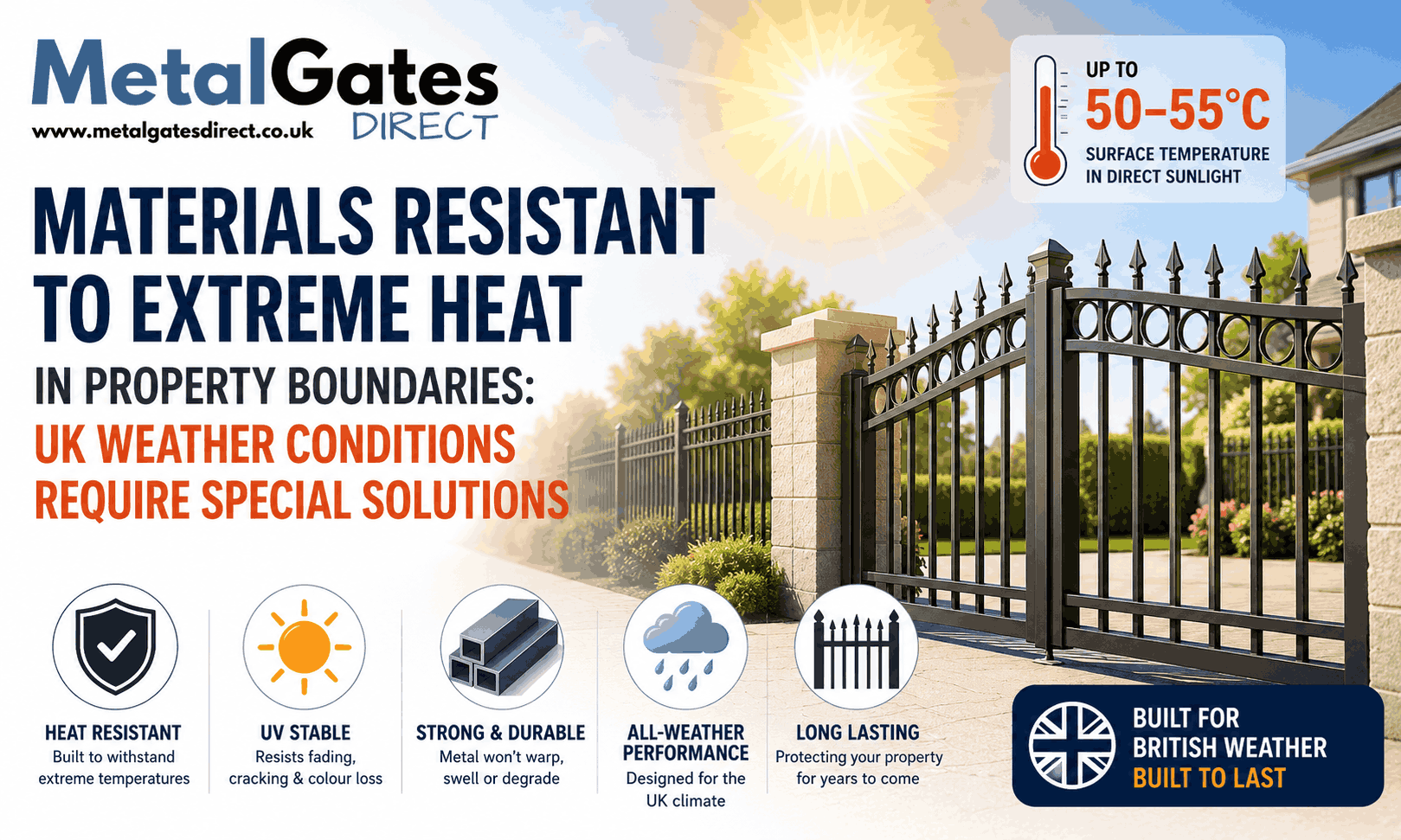
The climate of the Mediterranean has definitely come to Britain this year, as can be noticed already! Average air temperatures around 25 degrees, plants drooping due to dehydration, although rains occurred in April, and buildings facing the effects of these quite extreme conditions. This tendency in weather development is not temporary; indeed, British weather is becoming more and more like this every summer. Therefore, choosing materials for construction becomes especially crucial nowadays.
Gates, railings, fences and other objects defining property borders are directly exposed to climatic influence. They face direct exposure to the sun’s rays, thus they do not have any protection against the excesses of heat like buildings themselves. The traditional materials are now faced with new conditions unknown before and necessitating new approaches to their treatment.
The Temperature Challenge
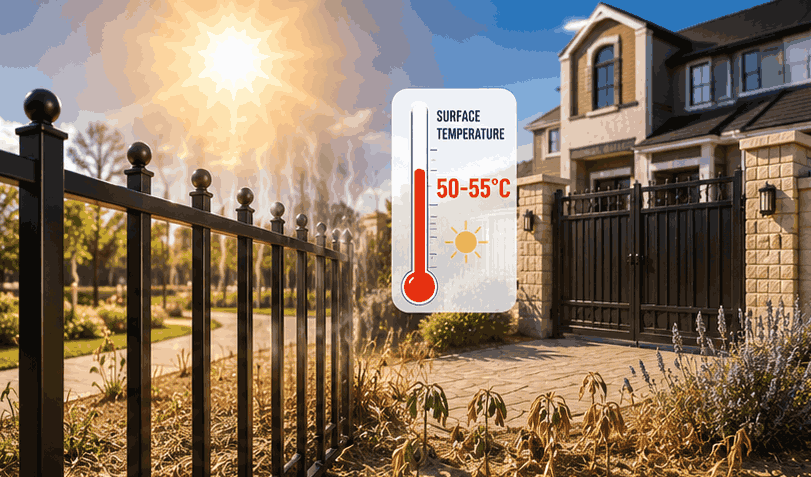
It is crucial to understand how temperatures affect different materials. Although the air temperature has been warmer this summer, the surface temperature of black metal gates and railings in direct sunlight can easily go up to 50-55 degrees. Thus, a material which copes with a 20-degree environment quite decently cannot stand such a temperature.
Material behaviour at 30 degrees does not have anything common with its behaviour at 50. Paintings and coatings break down under the influence of high temperatures, while joint materials are worn out with each cycle of thermal expansion.
What is important here is the fact that it is not necessary to have only one-day high temperature. Several days spent in 30 degrees create a cumulative effect that surpasses several months of traditional weather conditions. Materials need to cope not only with extreme heat but also with constant changes between it and cold weather.
Why Metals Are Good in High Temperatures
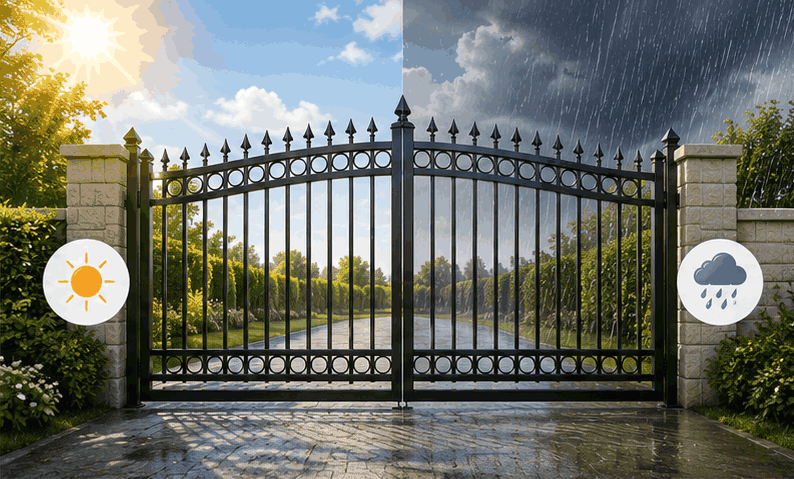
Metal fences, gates and railings are much more resistant to heat than any other type of materials. Properties which make metals inappropriate for some applications turn into their advantage in case of extreme weather.
They do not contain any moisture; thus, they do not suffer from wet-dry processes destroying wooden materials. Metals just heat up under the sun's rays and do not suffer from swelling and deformation.
The process of thermal expansion of metal is predictable and controllable. For example, in a 1 degree change steel expands by 12 microns per meter, whereas aluminium moves twice as much. While the numbers look huge, there is no problem in providing enough space for this movement in installation designs.
The best thing about metal boundaries is their resistance to high temperatures. Powder coating used for metal surfaces is produced using high temperatures, which are much higher than the temperatures created under UK weather conditions. If it works under high temperatures, it will withstand 50-degree heat easily.
All gates and railings in our Classic, Manor, and Regent collections are made of metals coated properly. There are no decorative layers used – all these products are built to protect the boundary of your property from any environmental threats.
Climate Resistance Requirements for Materials
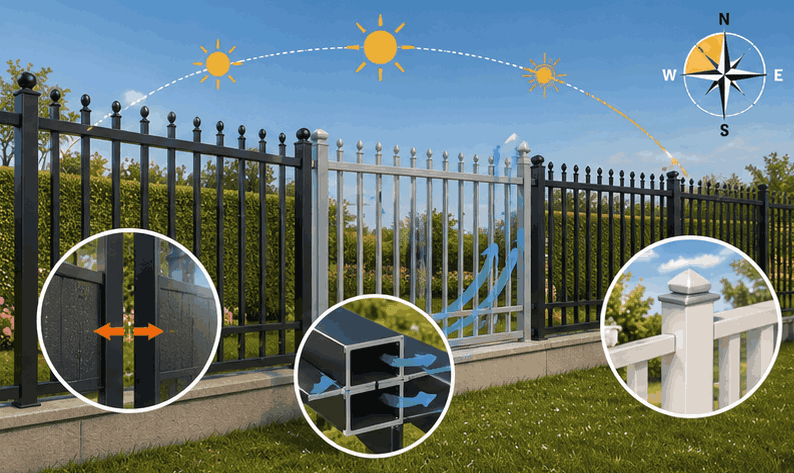
The choice of materials suitable for high temperatures is only half the task of constructing weatherproof boundary elements. Installation design plays an equally important role in coping with climatic effects.
Colour is one of the most important parameters when deciding on boundary materials. Light materials remain cooler than dark ones, which makes them more temperature resistant. White or light-grey powder coating can withstand temperatures below 40 degrees when black one reaches 55.
Orientation of boundary installations should also be considered. For example, north-facing installations remain considerably cooler compared to south-bound boundaries. Eastern and western orientations get hot only for a few hours during the day.
Proper ventilation allows preventing heat concentration inside materials. Metal railing systems with ventilation openings remain much cooler compared to the same gates made of solid panels.
Conclusion
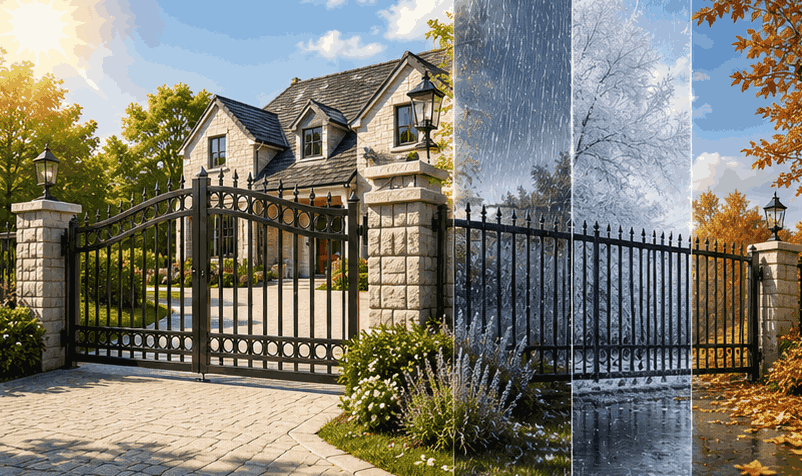
With current changes in the UK climate, high temperatures are becoming increasingly usual. Boundary products that will be constructed now need to cope with the climate that is becoming more extreme every year.
At Metal Gates Direct, we can observe increasing tendencies in customer's desire for temperature resistance in addition to classical requirements like security. We believe it is absolutely logical – replacing boundary elements every few years is useless, even if the first price is low.
In our company, we pay special attention to the selection of temperature resistant materials, especially metals, for boundary gates and railings. They are not perfect – still, they offer better conditions for temperature stability than other materials.